
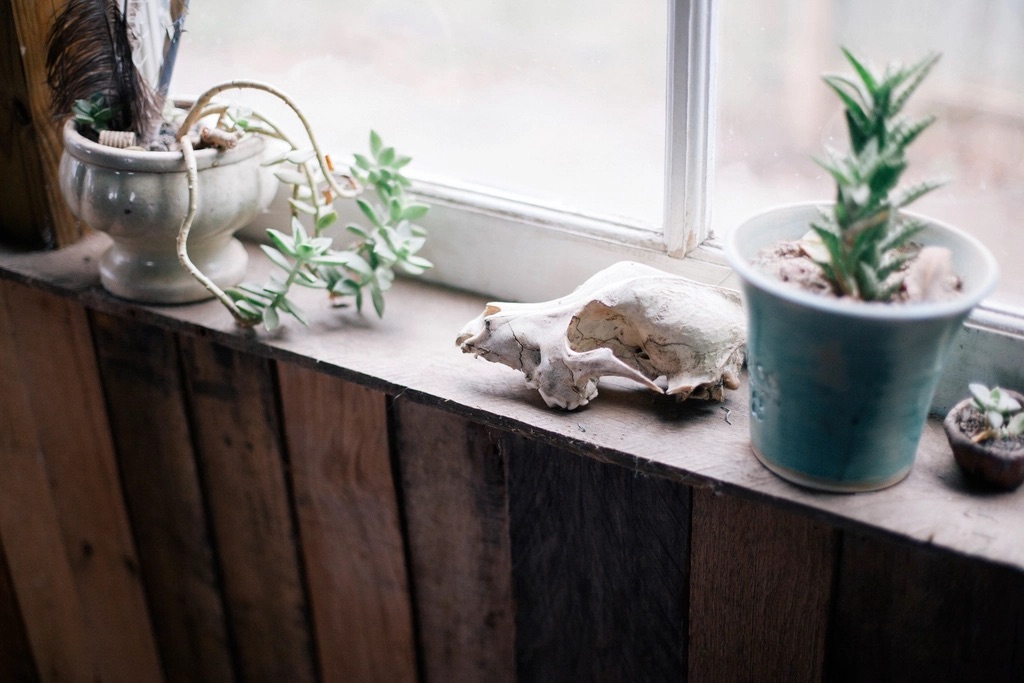
The best spooky houseplants look the part all year, not just on October 31. Near-black foliage like ZZ ‘Raven’, toothy carnivores like the Venus flytrap, and swirled, metallic begonias bring the witch’s-cottage mood without a single plastic cobweb. Check pets first, though: several of the darkest beauties are toxic to cats and dogs.
A storybook Halloween at the studio means a windowsill that looks like it belongs to someone who reads tea leaves. Here are the ten plants we’d put on it, and what each one asks of you.
Which houseplants are the spookiest?
1. ZZ plant ‘Raven’
The darkest of the easy plants. NC State Extension describes the Raven cultivar’s lime-green new growth turning a dramatic purple-black as it ages. ZZ plants tolerate very low light but do best in bright indirect light, and they store water in fleshy rhizomes, which makes them highly drought tolerant. The same page rates them medium toxicity to cats and dogs, so keep them up high. The ZZ also tops our list of the best low-light indoor plants.
2. Venus flytrap
Toothy, snapping and genuinely carnivorous. Venus flytraps want full sun to partial shade and rainwater or distilled water; NC State warns that treated or hard tap water can kill them. The ASPCA lists them as non-toxic to cats and dogs.
3. Cobra lily
A pitcher plant whose hooded leaves rise like a snake about to strike, with a forked flap hanging below the hood. It’s a collector’s plant, better admired than attempted if you’re new to carnivores. The ASPCA lists Darlingtonia californica, also called cobra plant and cobra lily, as non-toxic to cats and dogs.
4. Black bat flower
Tacca chantrieri earns its name: dark purple-black flowers with wide, wing-like bracts and long trailing whiskers. It’s the most theatrical plant on this list, and a special-order find rather than a garden-center staple. We couldn’t find it in the ASPCA’s plant database, so treat it as off-limits for pets.
5. Rex begonia
Swirled, metallic leaves in silver, burgundy and near-black, like something pressed into an old spell book. Beautiful, but the ASPCA lists begonias as toxic to cats and dogs.
6. Philodendron ‘Black Cardinal’
Broad, glossy leaves that come in reddish and deepen toward black. A generous, easy-going plant for a shelf. Philodendrons are toxic to cats and dogs per the ASPCA.
7. Echeveria ‘Black Prince’
A rosette succulent in deep chocolate-purple that looks carved rather than grown. Give it your sunniest window and let the soil dry out between waterings. The ASPCA lists the common Echeveria elegans as non-toxic to cats and dogs; it doesn’t list this cultivar separately.
8. Dark-leaved calathea
Some calatheas carry leaves so dark green they read as black, painted with pink or silver pinstripes. They fold their leaves up in the evening, which is either charming or eerie depending on your mood. The ASPCA lists Calathea as non-toxic to cats and dogs.
9. Ripple peperomia
Peperomia caperata has deeply crinkled leaves, and its darker forms look like tiny dragon scales. It stays small enough for a crowded sill, and the ASPCA lists it as non-toxic to cats and dogs.
10. Zebra haworthia
Stiff green spikes striped with raised white bands, like a skeleton’s ribs in miniature. A sunny-window succulent that asks for very little. The ASPCA lists Haworthia fasciata as non-toxic to cats and dogs.
Spooky houseplants at a glance
| Plant | The spooky part | Cats and dogs |
|---|---|---|
| ZZ ‘Raven’ | Purple-black leaves | Medium toxicity (NC State) |
| Venus flytrap | Snapping, toothed traps | Non-toxic (ASPCA) |
| Cobra lily | Hooded, snake-like pitchers | Non-toxic (ASPCA) |
| Black bat flower | Bat-winged, whiskered blooms | Not in the ASPCA database; keep away |
| Rex begonia | Swirled silver and near-black leaves | Toxic (ASPCA) |
| Philodendron ‘Black Cardinal’ | Leaves darkening toward black | Toxic (ASPCA) |
| Echeveria ‘Black Prince’ | Chocolate-purple rosettes | E. elegans non-toxic (ASPCA) |
| Dark-leaved calathea | Near-black leaves that fold at night | Non-toxic (ASPCA) |
| Ripple peperomia | Crinkled, scale-like leaves | Non-toxic (ASPCA) |
| Zebra haworthia | Rib-like white stripes | Non-toxic (ASPCA) |
How do you style a storybook Halloween windowsill?
Treat it like a still life, not a party aisle.
- Pick one dark anchor. A ZZ ‘Raven’ or a Black Cardinal gives the arrangement its shadow.
- Add texture in small pots. A haworthia, a ripple peperomia and an echeveria read as a little cabinet of curiosities.
- Let one plant be the storyteller. A Venus flytrap on the front edge is the plant guests ask about.
- Use warm, earthy containers. Terracotta, aged ceramics and a stoneware saucer or two keep it cozy rather than costume-y.
- Borrow from the forest floor. A few mushroom motifs, a sprig of dried seed heads, a small candle lantern set well away from the leaves.
Our cottagecore plant styling guide has more on the mushrooms-and-moss look. For small-space layouts, see how to style plants in a small apartment. If your plants have just come in for the season, give them the checklist in when to bring houseplants inside before they join the display.
FAQ
Are black houseplants really black?
Not quite. They’re very deep purple, burgundy or green that reads as black in most light. NC State describes ZZ ‘Raven’ as purple-black, for example.
Which spooky houseplants are safe for cats and dogs?
From this list, the ASPCA lists the Venus flytrap, cobra lily (Darlingtonia californica), calathea, ripple peperomia and zebra haworthia as non-toxic, along with Echeveria elegans. Rex begonias and philodendrons are listed as toxic, and NC State rates the ZZ plant as medium toxicity.
Can a Venus flytrap live on a windowsill?
Yes, if the sill is bright. NC State gives it full sun to partial shade, and it needs rainwater or distilled water rather than tap water.