
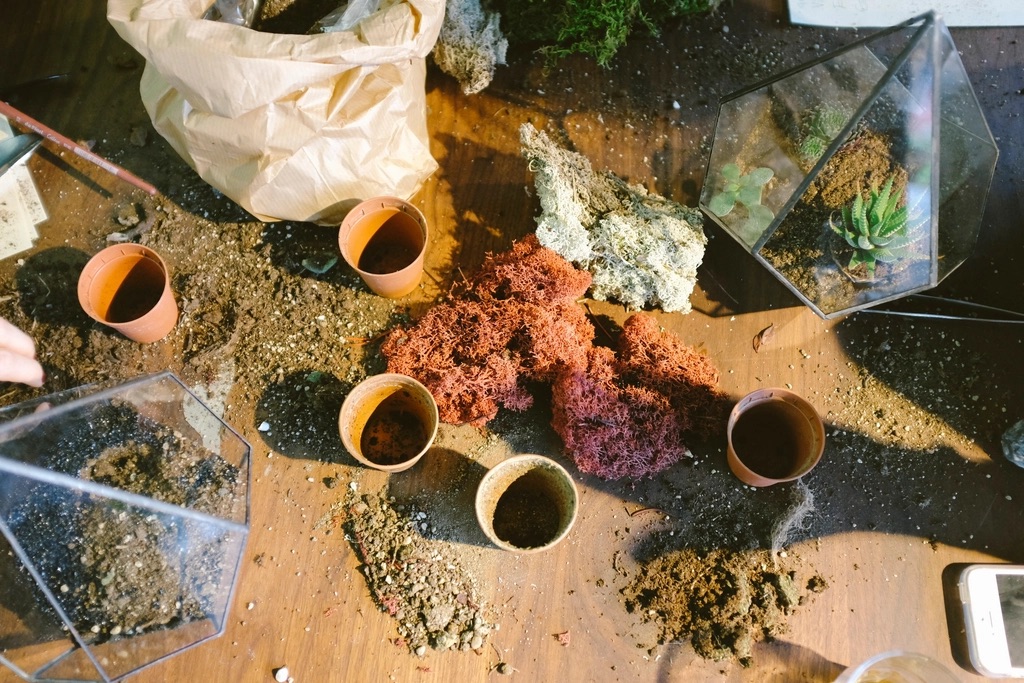
Yes, you can repot houseplants in fall, but most of them don’t need it. Spring is the best time, when plants are growing actively and recover quickly. Repot in fall only when waiting would do more harm: signs of root rot, a plant coming back indoors that may be carrying pests, or roots so crowded the soil dries out within days.
It’s a common October question at the studio, usually asked while holding a plant that just came in from the porch with roots poking out of the drainage holes. Here’s how to decide, and how to do it gently if the answer is “now.”
When is the best time to repot houseplants?
Spring. Penn State Extension says the best time is in the spring when a plant naturally and actively begins its seasonal growth. A plant putting out new roots and leaves settles into fresh mix quickly. In fall, growth is slowing down, so a plant has less momentum to recover.
That’s why our spring repot ritual is the main event of the potting year. A fall repot is the exception, not the routine.
Signs a repot can’t wait for spring
Repot now if you see any of these:
- Signs of root rot. The Brooklyn Botanic Garden lists sagging leaves, leaf drop, dark discoloration at the soil line and fungus gnats among the signs a plant needs repotting.
- A plant coming back indoors. The same guide recommends repotting plants that spent the summer outside when they come back in, to avoid bringing a pest infestation indoors.
- Soil that dries out within days. Penn State lists potting mix that dries out very quickly, even in cooler temperatures, as a sign a plant has outgrown its pot.
- Roots with nowhere left to go. Roots growing through the drainage holes, or roots circling the root ball so densely you can barely see any potting mix (Penn State).
If none of those apply, and the plant is simply a little snug, let it wait. It will be happier in spring.
A quick decision guide
| What you see | What to do |
|---|---|
| Healthy plant, a few roots at the drainage holes | Wait for spring |
| Plant just back in from outdoors | Repot now, into fresh mix, to leave outdoor pests behind |
| Sagging leaves, dark soil line, fungus gnats | Repot now and check the roots for rot |
| Soil dries out within days, roots circle the whole ball | Repot now, one size up |
| Plant is big enough and you don’t want it bigger | Root-prune and return it to the same pot |
How to repot in fall without shocking the plant
- Go up just one size. Penn State recommends a container only slightly larger than the current one. The Brooklyn Botanic Garden gives an example: a plant in a 3-inch pot should go into no larger than a 5-inch pot.
- Check the roots as you go. Kansas State’s extension guide describes a rootbound plant as one with lots of roots circling around the edge of the pot when you slide it out. If soil falls away and most roots stay hidden, it isn’t rootbound.
- Use fresh potting mix. Especially for plants coming in from outdoors, where old soil may be hiding insects.
- Water thoroughly, then let it drain. Penn State’s instruction is to water the plant thoroughly in its new pot and let it drain well.
- Keep it bright, and skip the fertilizer. Iowa State advises stopping fertilizer in fall and winter, since plants aren’t actively growing.
What if the plant is already the size you want?
You don’t have to move it into a bigger pot. Penn State describes an alternative for a rootbound plant you’d like to keep the same size: remove the outer section of the roots, return the root ball to its container with some new potting mix, and cut back some of the top growth.
Keeping the mess contained
A fall repot tends to happen indoors, on the kitchen counter, with the windows shut. We do ours on the Botanical Potting Mat: tip the plant out, tease the roots, refill the pot, and fold the spilled soil straight back into the bag. For a proper setup, see our indoor repotting station guide and how to repot without making a mess. If you’re bringing plants in from outside, our checklist for when to bring houseplants inside walks you through debugging them first.
FAQ
Can you repot plants in October?
Yes, when there’s a reason: root rot, pests, a plant coming back indoors, or roots with nowhere left to go. Otherwise, Penn State recommends spring, when plants begin active growth.
Should I repot a rootbound plant in winter?
If it’s badly rootbound and the soil dries out very quickly, yes. Go up just one pot size and water it thoroughly. If it’s only mildly snug, wait for spring.
What is repot shock?
It’s the slowdown a plant can show after its roots are disturbed. Keeping the new pot only slightly larger, disturbing the roots no more than needed, and giving the plant bright light afterwards all help it settle.
Should I fertilize after repotting in fall?
No. Iowa State advises stopping fertilizer in fall and winter. Fresh potting mix is plenty until spring growth starts.