
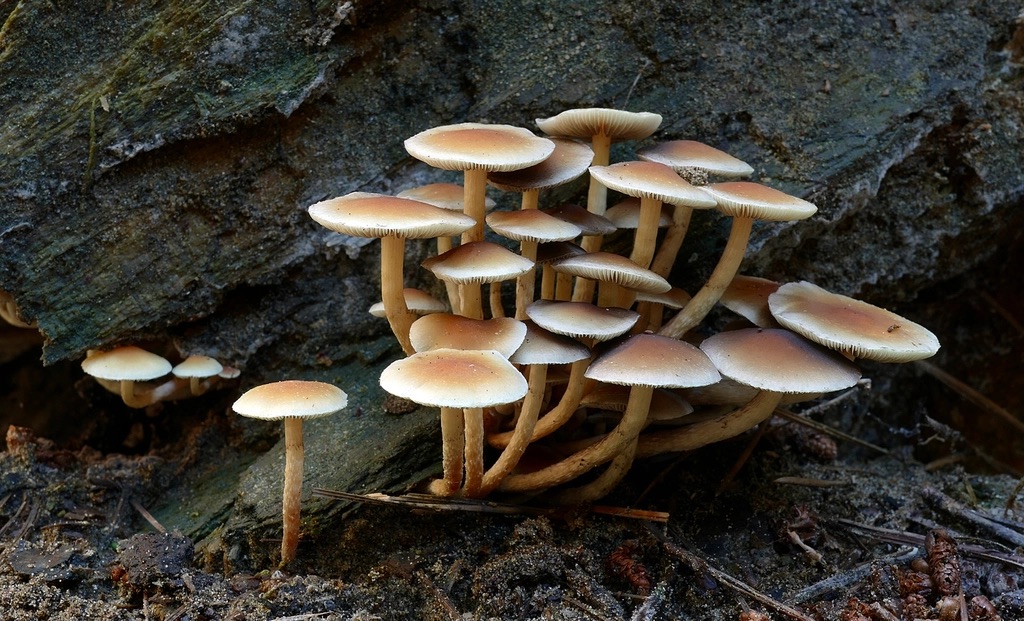
Mushrooms in houseplant soil are almost always harmless to the plant. The bright yellow one that pops up in pots, the flowerpot parasol, feeds on dead organic matter in the potting mix, not on living roots. The one real caution: it’s regarded as poisonous if eaten, so pick the caps if pets or small children share the room.
That’s the short version. The longer one is a little more charming, because a mushroom appearing overnight in a pot of pothos is one of the stranger small surprises of keeping plants indoors.
What is the yellow mushroom in my plant pot?
It’s almost certainly Leucocoprinus birnbaumii, a small, sulphur-yellow mushroom that goes by a handful of names: the yellow houseplant mushroom, the yellow parasol, and the flowerpot parasol. Iowa State University Extension identifies it as the usual suspect when yellow mushrooms appear in houseplants.
The mushroom you see is only the fruiting body. The fungus itself lives in the potting mix, quietly breaking down bits of bark, peat and other organic matter, and sends up caps when conditions suit it.
Are mushrooms in houseplant soil bad for the plant?
No. Iowa State is direct about it: the fungus “does not harm living plants and mushrooms do not need to be removed for the plant’s sake.” It’s a decomposer. Penn State Extension describes it as a saprotrophic fungus that thrives on decaying organic matter, compost and commercial potting soils.
If anything, a mushroom tells you something about the pot rather than the plant: the mix is rich in organic matter and it has been staying moist.
Are yellow mushrooms dangerous to pets or children?
They can be if eaten. Iowa State notes the mushrooms are “regarded as poisonous to people and animals,” and recommends removing them as they appear if pets or small children live in the home. Penn State lists gastrointestinal upset, from nausea to vomiting and diarrhea, among the symptoms.
Touching one is fine. The University of Washington’s Miller Library passes along the plain advice of mycologists: it won’t hurt you unless you eat it, and handling it won’t hurt you either. Wash your hands anyway, out of general good sense.
Why did mushrooms suddenly appear in my houseplant?
Two ingredients: spores and moisture. According to Iowa State, the fungus may have arrived in the bag of potting mix, or a spore may simply have floated in on the air. Penn State adds that it favors warm, moist conditions with high humidity, roughly 59°F to 80°F. That describes most living rooms, especially near a humidifier or after a generous watering.
That’s why mushrooms tend to show up after a repot with fresh, peaty mix, or in a pot that has been watered on a schedule instead of by feel. If you just brought plants in for the season and are still adjusting how often you water, our guide to fall houseplant care walks through the changes.
How do I get rid of mushrooms in my houseplants?
Honestly, you may not fully get rid of them, and that’s fine. The Miller Library’s source puts it bluntly: there’s no getting rid of it short of replacing all the soil, and even then it might come back. Iowa State adds that fungicides are generally not effective against mushrooms. What you can do is keep the caps down and make the pot less inviting.
- Pick the caps. Pinch them off at the soil line with a tissue or paper towel and put them in the bin, not the compost. Do this daily if pets or children are around.
- Let the top of the soil dry out. Water when the top inch is dry rather than on a calendar. Penn State’s first prevention tip is simply not to overwater. Our watering field guide covers how to tell.
- Scrape and top-dress. Lift off the top inch of soil and replace it with fresh mix.
- Repot as a last resort. If you want a clean slate, shake out the old mix and repot into fresh soil. It’s a messy job, so set up somewhere that catches the soil, and know the mushrooms may still return. If you’re weighing a fall repot anyway, read whether it’s OK to repot in fall first.
What should I do about the mushrooms? A quick guide by household
| Your household | What we’d do | Why |
|---|---|---|
| No pets, no small children | Leave them, or pick them if you’d rather not see them | They don’t hurt the plant |
| Pets or small children | Pick the caps daily and bin them | Regarded as poisonous if eaten |
| You want them gone | Let the soil dry more between waterings, then top-dress or repot | Less moisture means fewer caps; fresh mix removes some of the fungus |
The best mushrooms are the illustrated kind
We’ll admit a soft spot here. Mushrooms are a favorite motif in the studio, hand-drawn across the Botanical Potting Mat. The drawn ones have the advantage of staying put, never needing to be picked, and being perfectly safe around a curious cat.
For more mushroom-flavored decorating that won’t sprout in your pots, our cottagecore plant styling guide and the spooky houseplants roundup are good places to wander.
FAQ
Can I eat the yellow mushrooms growing in my plant?
No. They’re regarded as poisonous to people and animals. Pick them and throw them away.
Will the mushrooms spread to my other houseplants?
They can turn up in other pots, since spores travel on the air and arrive in potting mix. Pots that stay damp and warm are the likeliest to fruit.
Should I throw out the plant?
No. The fungus breaks down dead organic matter and doesn’t harm living plants. Keep the plant, adjust the watering, and pick the caps.
Do fungicides get rid of houseplant mushrooms?
Generally not. Iowa State Extension notes fungicide treatments are not usually effective against mushrooms. Drier soil and fresh mix do more.