
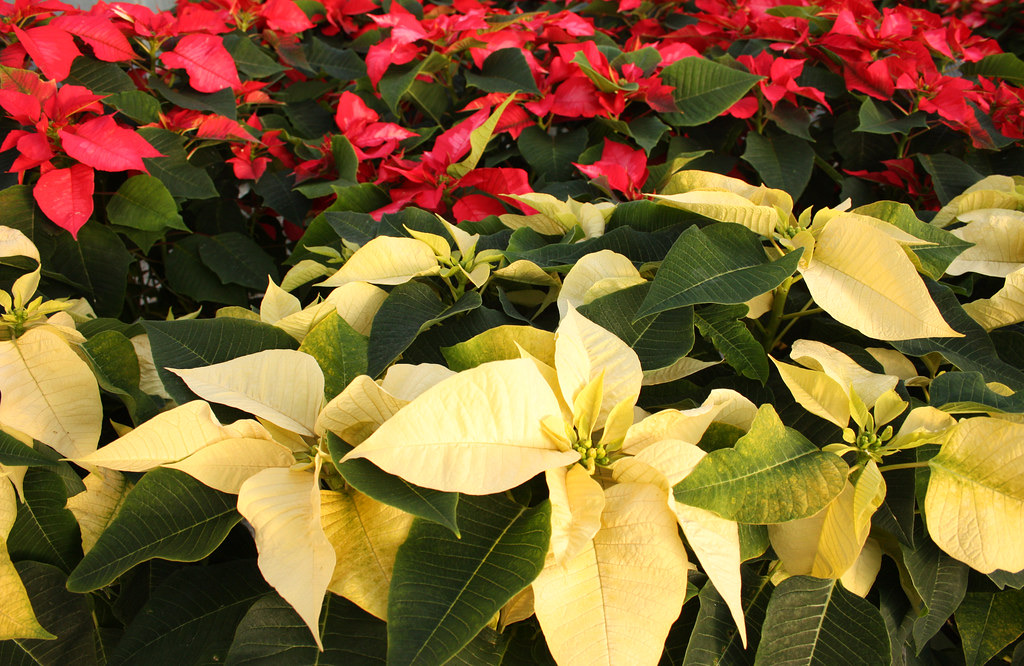
The easiest holiday plant for most homes is the Christmas cactus: it likes bright, indirect light, wants water only when the top inch of soil is dry, and the ASPCA lists it as non-toxic to cats and dogs. Poinsettias are the classic, amaryllis and paperwhites are the showiest, and the Norfolk Island pine is the living tree. Here’s how the five compare.
This is our field guide to the plants that arrive in shops, in gift bags and on doorsteps between November and New Year’s. Each gets a short profile, and the table below puts them side by side.
Which holiday plant should I get?
| Plant | Light | Water | Pets (ASPCA) | When it shines |
|---|---|---|---|---|
| Poinsettia | Bright, indirect | Doesn’t like wet soil; water when the pot feels light | Toxic, but “generally over-rated in toxicity” | In stores from the Wednesday before Thanksgiving |
| Christmas cactus | Bright, indirect | When the top inch of soil is dry | Non-toxic | Needs long nights in fall to bloom |
| Amaryllis | A bright spot | See our amaryllis guide | Toxic | Blooms about 6–8 weeks after planting |
| Paperwhites | Bright; cooler once growing | Water to the base of the bulbs | Toxic; bulbs most poisonous | Blooms about 4–6 weeks after planting |
| Norfolk Island pine | At least 2 hours of bright light a day | When the top inch is dry | Non-toxic | All season, as a living tree |
If you share your home with a cat or dog, the Christmas cactus and the Norfolk Island pine are the two from this list the ASPCA lists as non-toxic.
Poinsettia: the classic
The short version: bright, indirect light, and go easy on the water.
Poinsettias are, in the words of University of Missouri Extension, “our nation’s most popular potted flowering plant.” Missouri Extension notes they’re sold between the Wednesday before Thanksgiving and Christmas Day. At the store, look for the tiny true flowers (the cyathia) in the center of the colored bracts, which show the plant is still young, and check the undersides of leaves for insects.
At home, Missouri Extension’s advice is simple: poinsettias “do not like wet soil.” Empty the saucer after watering, and if the pot is wrapped in foil, poke a hole so water can drain. Lift the pot to judge; if it feels light, it may need water.
Pets: the ASPCA lists poinsettia as toxic to dogs, cats and horses. It says the sap irritates the mouth and stomach, “sometimes causing vomiting, but generally over-rated in toxicity.” Keep it out of reach anyway.
Christmas cactus: the easiest keeper
The short version: bright, indirect light, water when the top inch is dry, and long, dark nights in fall.
UF/IFAS Extension says Christmas cactus grows best in bright, indirect light and should be watered only when the upper inch of soil feels dry. To bloom, it needs at least twelve hours of darkness. UF/IFAS advises keeping it away from artificial light at night from October through December if you want holiday flowers. Our guide to a Christmas cactus that won’t bloom has the full darkness countdown.
It’s also prone to bud drop, so UF/IFAS recommends avoiding extreme changes and keeping it away from drafts and heat sources. Not sure whether yours is a Christmas, Thanksgiving or Easter cactus? Here’s how to tell them apart.
Pets: the ASPCA lists the Christmas cactus as non-toxic to dogs, cats and horses.
Amaryllis: the showstopper
The short version: plant the bulb about two months before you want flowers.
Iowa State University Extension says an amaryllis usually blooms about 6 to 8 weeks after planting. For Christmas blooms, it suggests planting in early to mid-November. Our amaryllis count-back calendar turns that into dates.
Pets: the ASPCA lists amaryllis as toxic to dogs, cats and horses.
Paperwhites: the fastest bloom
The short version: no chilling needed, flowers in about a month, and a clever fix for flopping.
University of Illinois Extension says paperwhites typically bloom 4 to 6 weeks after planting and have no chilling requirement. Set the bulbs on pebbles with water just touching their base. Illinois suggests moving them somewhere cooler, in the 60s°F, once they’re growing, to keep them from getting leggy. For the rest, including Cornell’s alcohol trick, see our guide to forcing paperwhites.
Pets: paperwhites are narcissus, which the ASPCA lists as toxic to dogs, cats and horses. The bulbs are the most poisonous part.
Norfolk Island pine: the living tree
The short version: bright light, even watering, and more humidity than a heated room offers.
Colorado State University Extension recommends at least two hours of bright, indirect sunlight a day. Water thoroughly when the top inch of soil is dry, and keep it around 60 to 72°F by day. It thrives at about 50 percent relative humidity. Purdue Extension notes that indoor humidity can drop to about 15 percent in winter, so a humidifier helps. Purdue also says it’s normal for a few needles on the lowest branches to brown and drop. Widespread browning points to water, drafts or dry air. And yes, Purdue calls it “a terrific living Christmas tree.”
Pets: the ASPCA lists Norfolk Island pine as non-toxic to dogs, cats and horses (on its page for the Australian pine).
How do I keep holiday plants happy through December?
- Keep them out of drafts. UF/IFAS links drafts and heat sources to bud drop in Christmas cactus, and Colorado State links furnace and door drafts to browning needles on Norfolk Island pine. Keep every holiday plant away from both.
- Water by feel, not by calendar. Lift the pot or touch the soil first. Our watering field guide explains how.
- Give them the brightest indirect light you have. December days are short. Our guide to window direction helps you find the best spot.
- Mind the pets. Place toxic plants well out of reach, or choose the Christmas cactus and the Norfolk Island pine.
Holiday plants make lovely gifts, too. Our Plant Lover’s Gift Guide 2026 has ideas for pairing a plant with something useful.
FAQ
What is the easiest holiday plant to care for?
The Christmas cactus. It takes bright, indirect light, needs water only when the top inch of soil is dry, and the ASPCA lists it as non-toxic to cats and dogs.
Which Christmas plants are safe for cats and dogs?
Of the five here, the ASPCA lists the Christmas cactus and the Norfolk Island pine as non-toxic. Poinsettia, amaryllis and paperwhites are listed as toxic.
Are poinsettias really poisonous?
The ASPCA lists them as toxic to cats and dogs, but describes them as “generally over-rated in toxicity,” with mouth and stomach irritation the main concern. Keep them out of reach.
When should I buy holiday plants?
Poinsettias arrive in stores from the Wednesday before Thanksgiving. Plant amaryllis in early to mid-November and paperwhites 4 to 6 weeks before you want flowers.