
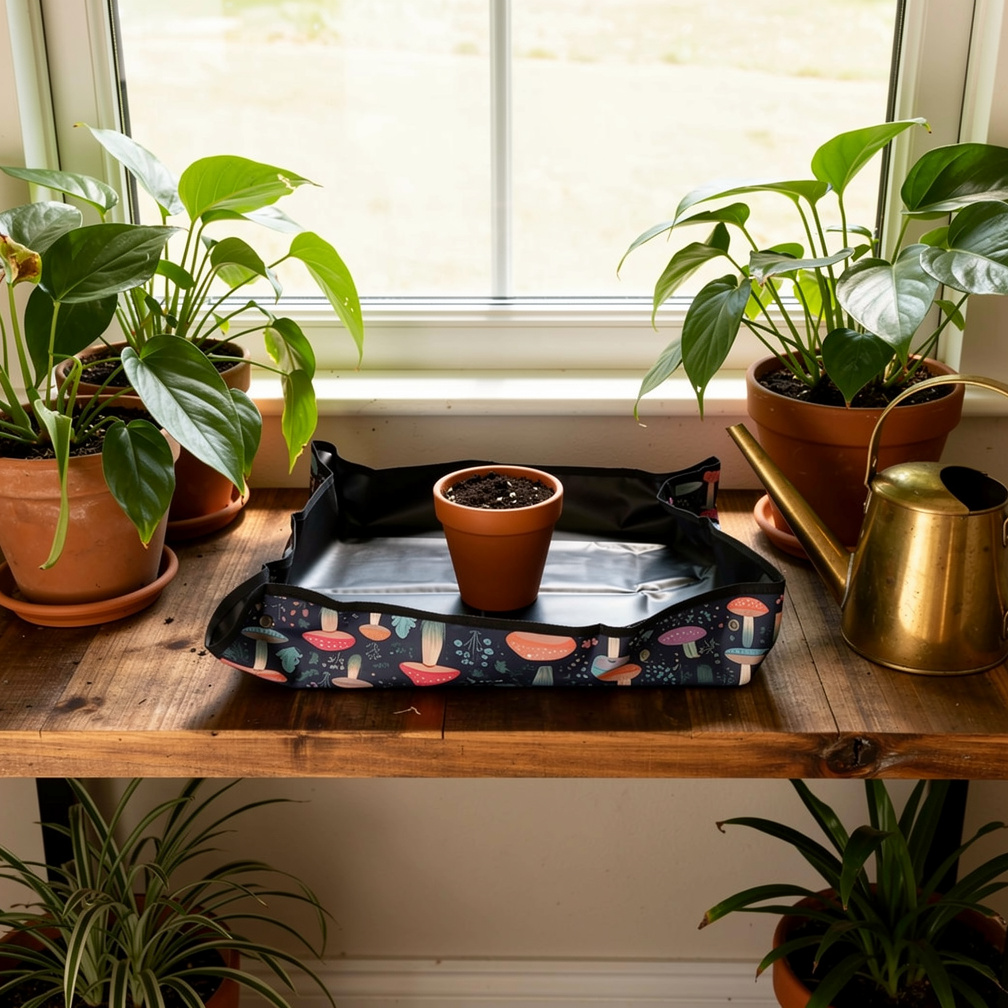
The single most useful skill in keeping houseplants alive is reading the light in your apartment. More important than watering. More important than fertilizing. More important than picking pretty pots.
A pothos in the right light will grow ten feet in a year. A pothos in the wrong light will sulk for three years and never put out a new leaf. Same plant. Same care. Light is the variable.
This is the short field guide we wish someone had handed us when we started.
The four window directions
In the northern hemisphere (we’re in New Haven, CT; adjust if you’re in Sydney), windows fall into four categories:
South-facing window — bright direct light
The most light any window in your apartment gets. Direct sun for 6+ hours a day, peaking around midday. This is the spot for plants that evolved to grow in full sun: cacti, succulents, citrus trees, herbs (basil, rosemary), bird of paradise, croton.
A south-facing window is also where most houseplant beginners kill plants by accident, because they put a pothos or a fern there and burn the leaves within a week. Most popular houseplants don’t want this much light.
West-facing window — bright direct, harsher
West windows get strong afternoon sun. The light is hotter and lower-angle than south light, which means it penetrates deeper into the room but also burns more aggressively. Good for: most succulents, snake plants, dracaenas, jade plants, geraniums.
Skip: ferns, calatheas, peace lilies. They’ll cook.
East-facing window — bright indirect, the goldilocks zone
This is the spot most houseplant guides mean when they say “bright indirect.” Soft morning sun for 2–4 hours, then bright ambient light the rest of the day. The east-facing window is the most forgiving spot in any apartment.
Plants that thrive here: monstera, philodendron, pothos (in a slightly back-from-the-window position), peace lily, calathea, fiddle leaf fig (though they prefer more light), most ferns.
If you only have one window and it’s east-facing, you can keep almost any popular houseplant alive.
North-facing window — low to medium indirect, no direct sun
North windows never get direct sun (in the northern hemisphere). The light is consistent but dim — you can read by it during the day, but you can’t grow a tomato in it.
Plants for north-facing windows: ZZ plant, snake plant, pothos, philodendron (heartleaf), parlor palm, cast iron plant, Chinese evergreen, peace lily, ferns.
We have a full guide to the best low-light indoor plants — those are the plants for north-facing apartments.
How to read your own apartment’s light
Don’t rely on which direction your apartment faces in the listing. Read the light yourself. Here’s the test:
The shadow test
At noon on a clear day, hold your hand 12 inches above the windowsill. Look at the shadow on the sill.
- Sharp, well-defined shadow with clear edges: bright direct light. South or west.
- Soft shadow with diffused edges: bright indirect. East, or south/west with a sheer curtain.
- Barely a shadow, just a slight darkening: low light. North, or far from any window.
Repeat in different spots of the room. The light changes dramatically depending on distance from the window.
The “can I read here” test
Sit in the spot at noon on a cloudy day. If you can comfortably read a paperback without turning on a lamp, you have medium light at minimum. If you need a lamp, it’s low light. If the page is brightly lit and you’re squinting slightly, you’re in bright indirect.
This test is more accurate than people give it credit for.
The phone light meter test
Most phones have a free light meter app. Plant care light requirements are measured in foot-candles (US) or lux (rest of the world).
Rough thresholds:
- Direct sun: 5,000–10,000+ foot-candles
- Bright indirect: 400–1,000 foot-candles
- Medium indirect: 200–400 foot-candles
- Low light: 50–200 foot-candles
- Too low for most plants: under 50
Take readings throughout the day. The light changes by the hour.
What “indirect” actually means
This term gets misused constantly. Indirect light doesn’t mean dim. It means bright but not direct.
A bright bathroom with a frosted window can be very bright but the light is technically indirect (the frost diffuses it). A spot 4 feet back from a south-facing window in a white-walled room is bright indirect. A windowsill behind sheer curtains is bright indirect.
Most “indoor plants” tags on plant care guides assume bright indirect. That’s the default zone they thrive in.
The seasonality everyone forgets
Light in your apartment changes dramatically through the year. Sun is higher and more direct in summer. Lower and softer in winter. A south-facing windowsill that scorches plants in July is the perfect spot for those same plants in December.
Practical takeaways:
- Move sun-loving plants closer to windows in winter. Even bright-light lovers benefit from being right against the glass in December and January.
- Move sensitive plants back from windows in summer. Calatheas, ferns, peace lilies — pull them a foot back from where they live in winter to avoid leaf scorch.
- Rotate plants weekly. Quarter-turn each plant once a week so they grow evenly instead of leaning permanently toward the light.
A few specific recommendations by light condition
You have a south-facing window: Buy a string of pearls. Get a citrus tree if you have floor space. A bird of paradise will be dramatic and happy there.
You have an east-facing window: Buy a monstera. Buy a philodendron. Buy any of the “popular houseplant” Instagram darlings. They’ll all do well.
You have only a north window: Start with a ZZ plant and a pothos. Add a snake plant. You can keep beautiful plants in this apartment; you just need the right ones.
You have no real window light: Be honest about it. Either invest in a grow light (modern ones are quite good and small), or accept that this apartment will be a plant-free zone except for the most extreme low-light plants (cast iron, ZZ, snake). It’s okay.
On grow lights
A reasonable grow light can transform a dim apartment into a viable plant space. Modern LED grow lights are small, look like normal lamps, and run on a timer. Worth considering if you love plants and your apartment is too dim.
Look for: full-spectrum LEDs, 20+ watts, timer-compatible. Avoid the violent purple “growing lights” that look like a sci-fi prop — they work, but they don’t look like part of your home.
Final thoughts
Reading light is the foundational plant care skill. Once you can walk into a room and instinctively know where on the brightness spectrum each spot lives, plant care gets dramatically easier. You stop killing plants by accident. You stop trying to grow ferns in west-facing apartments. You buy the plant that will thrive in the spot you have, instead of trying to make a plant thrive in the spot you wish you had.
It’s a quiet skill, learned by paying attention. And once you have it, every other piece of plant advice you read makes more sense.
The Journal publishes a new field note every other Sunday. Browse all entries.