
A living Thanksgiving centerpiece uses potted plants instead of cut flowers, so it keeps going long after the pie is gone. Keep it low enough to talk across, group plants in a tray or long board, and choose plants that suit your guests and pets. Here are five designs, each with a materials list and steps.
Thanksgiving falls on Thursday, November 26 in 2026, which gives you a few weekends to gather pots, trays and a few small plants. Everything here goes back to a windowsill afterward.
How do I make a living Thanksgiving centerpiece?
Start with a base: a wooden board, a shallow tray or a long basket lined with a plastic sheet. Keep the plants in their pots so they’re easy to water and move. Tuck moss, small gourds or dried leaves around the pots to hide the rims. Aim for under about a foot tall, so everyone can see across the table.
A tip from the bench: assemble it somewhere that forgives spilled soil and moss. We build ours on the Botanical Potting Mat, then carry the finished tray to the table.
Five living centerpiece designs
1. The holiday cactus runner
Materials: three to five holiday cacti in bud or bloom, a long wooden board, sheet moss.
- Line the pots down the center of the board, alternating heights.
- Fill the gaps with moss to hide the pot rims.
- Keep the arrangement out of drafts. UF/IFAS Extension notes that Christmas cactus can be prone to bud drop, and advises avoiding extreme changes and keeping plants away from drafts and heat sources.
If you’re not sure which type of holiday cactus you have, our guide to Thanksgiving vs. Christmas cactus shows the difference. The ASPCA lists the Christmas cactus as non-toxic to cats and dogs.
2. The kitchen-herb board
Materials: small pots of rosemary, thyme and sage, a cutting board, kraft paper labels.
- Group the pots in the center of the board.
- Label each herb with a paper tag on a toothpick.
- Set out small scissors so guests can snip a few leaves for their plates.
Rosemary is non-toxic to cats and dogs, according to the ASPCA. After dinner, the pots go to a bright window. Our guide to keeping rosemary alive indoors in winter covers the rest.
3. Succulents and gourds
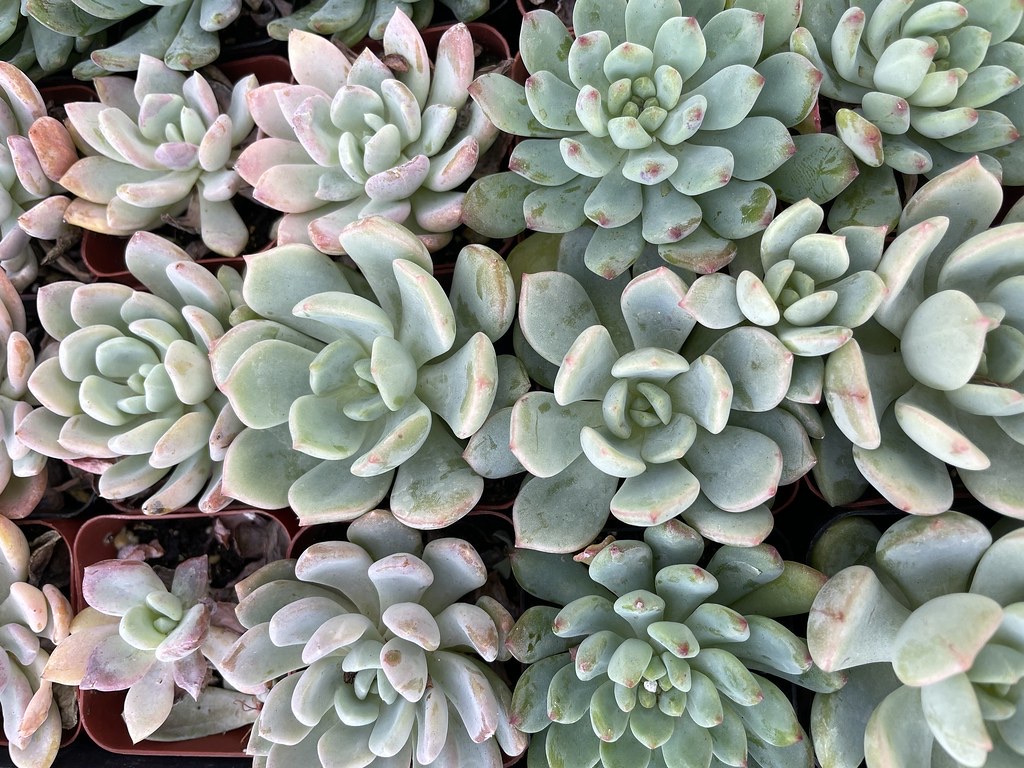
Materials: four to six small succulents such as echeveria, a shallow tray, mini pumpkins or gourds, gravel.
- Spread gravel across the tray.
- Nestle the succulents, still in their pots, into the gravel.
- Scatter mini pumpkins and gourds between them.
A caution for pet households: not every succulent is safe. Kalanchoe, a common flowering succulent, is toxic to cats and dogs, per the ASPCA. Check each plant’s label against the ASPCA’s list before it goes on the table. When the season ends, the gourds can go to the compost; our pumpkin guide explains how.
4. Mums in a low basket
Materials: two or three small potted chrysanthemums in warm tones, a low basket, a plastic liner.
- Line the basket so water can’t leak onto the table.
- Set the mums in and fill the gaps with dried leaves.
- Move the basket to the porch after the holiday.
Mums are the most autumnal option here, but they’re toxic to dogs, cats and horses, according to the ASPCA. Skip this one if pets can reach the table.
5. A fern and moss bowl
Materials: a small Boston fern, a wide ceramic bowl, sheet moss, a few pinecones.
- Set the fern, still in its nursery pot, in the center of the bowl.
- Pack moss around it and add pinecones at the edges.
- Mist the moss lightly the day before the dinner.
The ASPCA lists the Boston fern as non-toxic to cats and dogs. It’s soft and green, and it goes back to a spot with bright, indirect light afterward.
Which centerpiece is right for my table?
| Centerpiece | Plants | Pet note (ASPCA) | Keeps going after dinner? |
|---|---|---|---|
| Holiday cactus runner | Holiday cacti | Christmas cactus listed non-toxic | Yes, on a bright windowsill |
| Kitchen-herb board | Rosemary, thyme, sage | Rosemary listed non-toxic | Yes, in a sunny window |
| Succulents and gourds | Echeveria and similar | Check each plant; kalanchoe is toxic | Yes, the succulents do |
| Mums in a basket | Chrysanthemums | Toxic to cats and dogs | Outdoors, for a while |
| Fern and moss bowl | Boston fern | Listed non-toxic | Yes, in bright indirect light |
How do I keep a living centerpiece fresh until Thanksgiving?
- Water the day before, not the day of. Nobody wants a damp tablecloth.
- Keep it away from the oven and radiators while it waits in the kitchen.
- Give it light between meals. Move the tray to a bright spot for the days before and after the holiday.
- Line anything that holds water. A plastic liner inside a basket saves the table.
For more ways to arrange plants in a small space, our guide to styling plants in a small apartment and the cottagecore styling guide have plenty of ideas.
FAQ
What plants are good for a Thanksgiving centerpiece?
Holiday cacti, potted herbs like rosemary, small succulents, Boston ferns and mums all work. Choose pet-safe plants if cats or dogs can reach the table.
How far ahead can I make a living centerpiece?
Several days ahead, since the plants stay in their pots. Keep it in a bright spot and water it the day before the dinner.
Are mums safe to have on the table with cats?
The ASPCA lists chrysanthemums as toxic to cats, dogs and horses. Choose a holiday cactus, rosemary or a Boston fern instead.
What do I do with the centerpiece after Thanksgiving?
Put the plants back on windowsills, move the mums outdoors and compost the gourds.