
The most common question we get at the studio: how often should I water my plant?
The most useful answer is the most annoying one: it depends, and the right answer is to learn to read your plant. A fixed weekly schedule kills more houseplants than any other single mistake.
This is the full field guide to watering houseplants — how often, how much, how to tell, and what each plant is actually asking for.
The biggest misconception: there is no schedule
If you take one thing from this guide, take this: don’t water on a calendar. Water on a check.
The same plant in the same apartment needs different amounts of water in:
- Summer vs. winter (longer days = faster soil drying)
- A terracotta pot vs. a plastic pot (terracotta breathes)
- A south-facing window vs. a north-facing one (more light = faster drying)
- Heated dry winter air vs. humid summer air
A plant that needs water every 4 days in July might be fine for 14 days in December. Watering it weekly all year either kills it from drought (summer) or root rot (winter).
The finger test
The boring, universally-useful test:
- Push your index finger about an inch into the soil.
- If it comes out dry and clean — water.
- If it comes out cool and slightly dirty — wait.
- If it comes out muddy — wait longer.
This works for 80% of houseplants. There are exceptions (see below) but the finger test is the starting point. Do it before watering, every time, until you get a feel for what each plant looks like at different soil moisture levels.
How much water (not how often)
When you water, water thoroughly. Until you see water draining out the bottom of the pot. This:
- Saturates the entire root ball
- Flushes accumulated mineral salts out of the soil
- Encourages roots to grow deep (toward water) rather than shallow
Don’t water with “a splash” or “a few tablespoons.” Either water thoroughly or wait until the soil is ready for thorough watering.
After it drains, empty the saucer underneath. Plants sitting in standing water rot from the roots up.
Watering frequencies by plant type
These are rough starting points. Adjust based on your apartment.
Succulents and cacti — every 2–3 weeks
Let the soil dry out completely between waterings. Use a coarse, fast-draining mix. Bottom-watering works well for these.
Snake plant, ZZ plant, pothos, philodendron — every 1–2 weeks
The “easy” houseplants. Wait until the top inch of soil is dry. They prefer to dry out slightly between waterings.
Monstera, fiddle leaf fig, rubber tree — every 7–10 days
These need consistent moisture but not soggy soil. Wait until the top inch or two is dry, then water thoroughly.
Calathea, prayer plant — every 4–6 days
These like consistently moist (not wet) soil. They’re sensitive to drying out. Use filtered water — tap water minerals damage the leaves.
Ferns — every 3–5 days
Most ferns like consistently moist soil and high humidity. They’re the thirstiest houseplants and the hardest to keep happy in dry apartments.
Peace lily — when it tells you
Peace lilies dramatically droop when they want water and recover within an hour of being watered. They will train you to read them — let them go slightly droopy, then water thoroughly, watch them perk up.
Orchids — every 7–10 days (with caveats)
Orchids should be soaked briefly (10 minutes in a bowl of water) then drained completely. Never let them sit in water. The bark medium dries out faster than soil.
Signs of overwatering
The most common cause of houseplant death. Look for:
- Yellow leaves, especially older lower ones
- Mushy or black stems near the soil line
- Leaves that feel limp despite the soil being wet
- A faint sour or sulfur smell from the soil
- Fungus gnats (tiny flies that thrive in constantly wet soil)
- White fuzzy mold on the soil surface
If you see two or more of these, stop watering immediately. Let the soil dry out completely. If the plant has been chronically overwatered, you may need to repot it into fresh, dry soil and trim off rotting roots.
Signs of underwatering
Less common, easier to fix:
- Crispy brown leaf edges
- Soil pulling away from the sides of the pot
- The plant feels suddenly light when you lift the pot
- Drooping leaves that perk back up within hours of watering
- Slow or no new growth in summer
If you see these, water thoroughly and adjust your schedule. Most plants recover from a single dry-out without permanent damage.
Bottom-watering vs. top-watering
Top-watering
Pour water onto the soil surface until it drains out the bottom. This is the standard method, works for most plants. Run water for 15–30 seconds until you see steady drainage. Empty the saucer.
Bottom-watering
Set the pot in a shallow dish of water for 15–30 minutes. The soil wicks up moisture through the drainage hole. Take the pot out, let excess drain.
Bottom-watering is great for:
- Plants with sensitive leaves (African violets, calatheas)
- Plants that prefer consistent root-zone moisture
- Compacted soil that has stopped absorbing top water
We bottom-water about half the studio’s plants. Saves time once you have the routine.
The role of pots and drainage
Two pot details that change how often you’ll water:
Drainage holes are not optional
Pots without drainage holes trap water at the root zone and cause rot. If you love a planter without drainage:
- Use it as a cache pot, with the plant in a smaller nursery pot inside, or
- Add a deep layer of drainage rocks at the bottom (better than nothing, not as good as a real drainage hole)
Terracotta vs. plastic vs. glazed ceramic
- Terracotta: Porous, breathes, soil dries out faster. Best for plants that prefer to dry out (cacti, succulents, snake plants).
- Plastic: Holds moisture longer. Best for plants that prefer consistent moisture (ferns, calatheas).
- Glazed ceramic: In between. Most decorative cache pots fall here.
This is why a snake plant in terracotta might need water every 2 weeks but the same plant in plastic might be fine for 3.
Seasonal adjustments
Winter (October–March)
Most houseplants enter dormancy. They grow slowly and use less water. Cut watering frequency by 40–60%. Many people water on summer schedules into winter and rot their plants.
Spring (April–June)
Plants come back into active growth. Water needs increase. Watch for the first new leaves — that’s the signal to return to summer watering.
Summer (July–September)
Peak watering season. Hot apartments dry out fast. Some plants will need water every few days. Check the finger test every morning.
Fall (September–November)
Watering gradually decreases. Don’t let plants get root rot from winter overwatering caught at the tail end of summer habits.
On rainwater, tap water, and filtered water
For most plants, tap water is fine. But:
- Calatheas, prayer plants, and ferns are sensitive to chlorine, fluoride, and minerals in tap water. Use filtered or rainwater.
- Orchids appreciate rainwater or distilled water but tolerate tap.
- Most other houseplants are fine with tap, especially if you let it sit overnight in an open container (lets chlorine evaporate).
We keep a glass jug of filtered water near the plants. It looks nice, and it means we don’t have to think about it.
The watering ritual
The studio’s watering routine, for what it’s worth:
Saturday morning, coffee in hand, we go around to each plant with the watering can and the finger-test. Maybe a third get watered. The rest get a quick check-in — look at the leaves, rotate the pot a quarter turn, dust if needed, move on.
It takes about twenty minutes. It’s one of the better twenty minutes of the week.
The right tools — a long-spout watering can, a waterproof potting mat for soil-on-the-floor moments, a small ceramic dish to set down a soggy pot — make the ritual feel less like a chore.
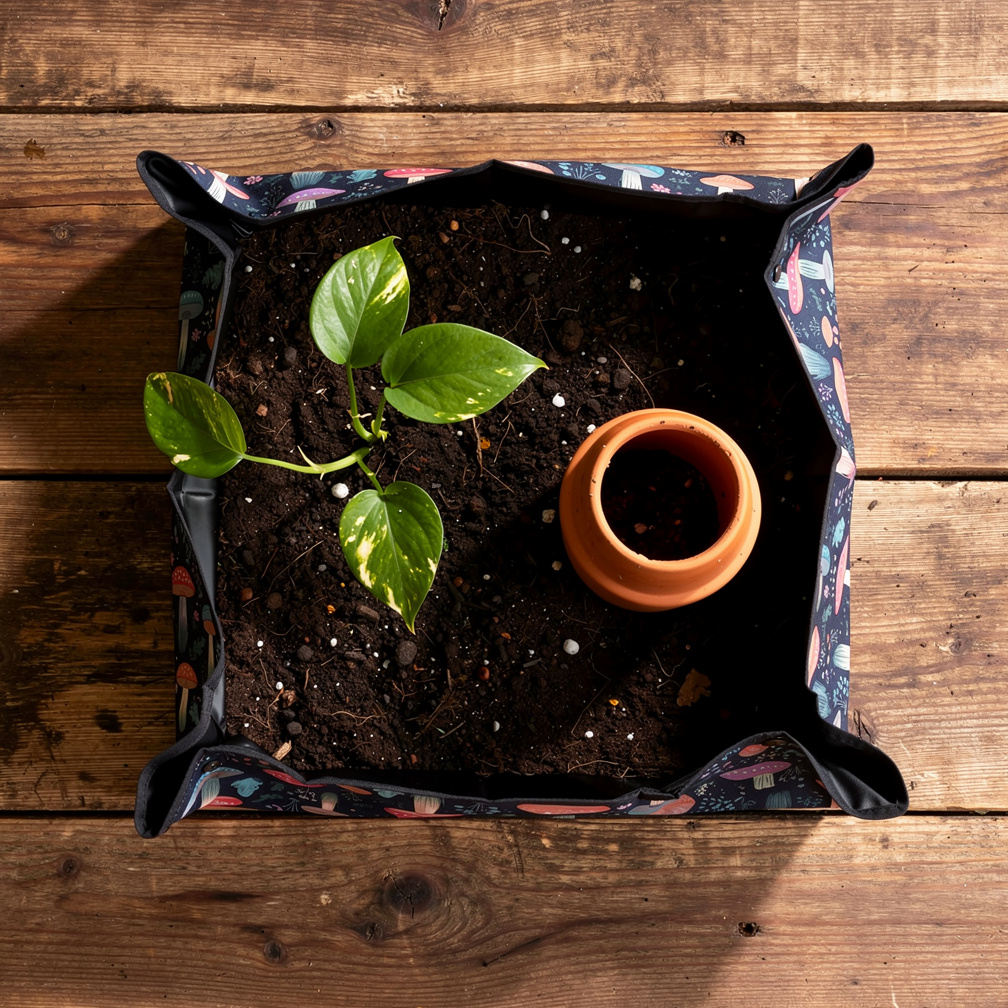
Tired of cleaning soil off the kitchen counter after every watering session? The Botanical Potting Mat is hand-illustrated, waterproof, and wipes clean. $25. Free shipping on $50+.