
A small confession: most plant accessories sold today look like outdoor gardening supplies that wandered indoors. Plastic. Loud branding. Designed to be hidden in a shed. Functional, but not something you’d leave on a shelf.
The other end of the spectrum is purely decorative — a ceramic mushroom that does nothing, a wooden plant stand that wobbles. Pretty, but useless.
This is a list of botanical home accessories that sit in the middle — beautiful enough to leave out, functional enough to actually use. These are the objects we keep in the studio and recommend without hesitation.
1. A waterproof potting mat (the one we make)
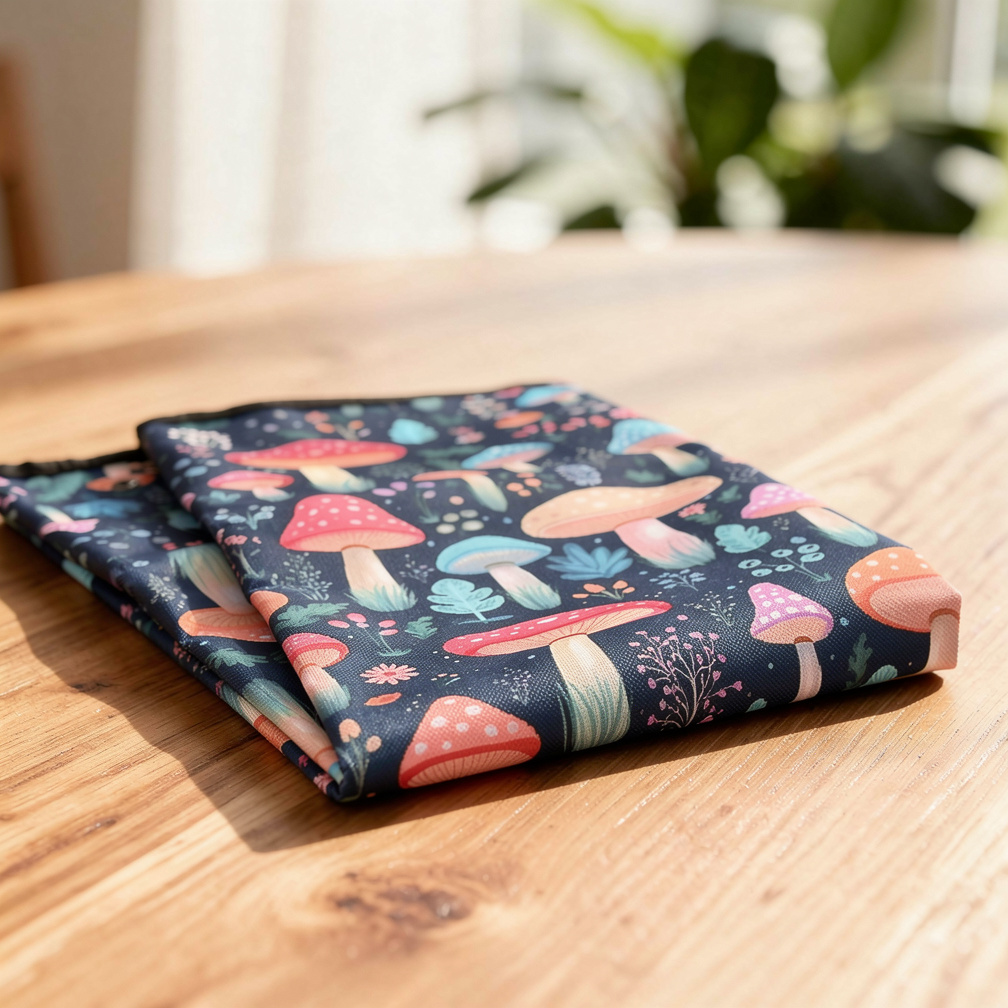
Starting with the obvious: we make one. The Botanical Potting Mat is a 28-inch square of waterproof canvas hand-illustrated with mushrooms and wildflowers on deep navy. Snap-up corners contain the mess. Wipes clean.
We built it because we got tired of cleaning soil out of grout. It’s $25 with free shipping on $50+. Beautiful enough to leave rolled up on a plant shelf between repots.
2. A brass plant mister
There’s no functional difference between a $4 plastic mister and a $40 solid brass one. But the brass one ages — it patinas, turns slightly green, gets character — and the plastic one doesn’t.
The brass mister becomes part of your morning. The plastic one stays in a drawer.
3. A ceramic propagation station
A tiered wooden or ceramic stand with small glass tubes for water-propagating cuttings. Trailing pothos cuttings, monstera nodes, philodendron stems — they all root in plain water, and watching them root is one of the small daily pleasures of plant care.
A propagation station turns that into decor. Five glass tubes in a row, each with a small cutting putting out white root tendrils, on a kitchen windowsill.
4. Hand-illustrated plant markers
We use these for keeping track of which seedlings are which, and for marking the last-repotted date on each plant. The hand-illustrated kind (mushrooms, leaves, ferns drawn in ink) look like small specimen labels in a Victorian conservatory.
Useful for: anyone propagating from cuttings, anyone with multiple varieties of the same plant, anyone who likes to know when each plant was last repotted.
5. A copper watering can with a long spout
The long-spout copper can is one of the great quiet flexes of the houseplant world. It pours precisely into the soil of small pots without splashing leaves. It looks like an heirloom.
Avoid the painted versions. Solid copper or solid brass, unfinished, allowed to age.
6. A linen apron for the bench
A small linen apron, the kind you’d wear gardening, kept folded next to your potting bench. We use ours partly for keeping soil off our clothes and partly because the act of tying on an apron is the signal that the work has started.
Look for natural linen or canvas. Cotton works but wrinkles harder.
7. A pair of bypass pruning shears
Sharp, well-made bypass pruning shears with a wooden or rubber handle. For pruning yellowed leaves, deadheading flowers, taking cuttings for propagation, trimming roots during repots.
A cheap pair is one of the small upgrades that immediately make plant care more pleasant. The cheap shears tear stems; good shears slice them.
Felco and ARS make ones that will outlive several apartments.
8. A wide, shallow ceramic dish for the bench
The studio has a wide, low ceramic dish on the potting bench. It holds: a chopstick (for settling soil), a small wire brush (for cleaning pots), a folded square of muslin (for wiping leaves), a few plant markers.
The dish itself is hand-thrown stoneware in a moss-green glaze. It cost $24. It’s the most-used surface in the studio besides the mat.
9. A glass jar of perlite
Functional but also genuinely beautiful. Perlite is the small white volcanic-glass material we mix into potting soil for drainage. Stored in a clear glass jar with a wooden lid, it becomes a small specimen — a snowy texture that catches the light.
Plus, you’ll use it constantly. Adding perlite to potting mix is one of the small upgrades that makes most houseplants thriftier.
10. A reference book on houseplants
We keep two on the bench:
- The House Plant Expert by D.G. Hessayon (the boring British classic, still the best plain-language reference for diagnosing problems)
- Wild at Home by Hilton Carter (the gorgeous styling book, for when you need inspiration)
A book about plants on a shelf full of plants is its own quiet object. Better than a phone full of tabs.
The case for buying fewer, better
The mistake most plant people make in their first year is buying too many cheap accessories. Five plastic watering cans. A drawer of disposable plant labels. A bag of generic potting mix that’s mostly bark dust.
Better: one excellent potting mat, one good pair of shears, one well-made watering can. Add slowly. Replace cheap things only when they break or when you find something genuinely better.
The accessories you actually use will reveal themselves over the first year of plant ownership. Don’t preemptively buy a kit. Buy the mat, and watch what you reach for again and again.
Looking for one to start with? The Botanical Potting Mat is the foundational accessory — the one that touches every repot, every soil bag, every fresh-cutting moment. $25. Free shipping on $50+.